One puts whiskey in the foreground with a little sweetness and bitters. The other brings vermouth into the mix. Here’s how to choose the drink you’ll enjoy, order it clearly, and decide which one makes sense to keep making at home.
The Manhattan and the Old Fashioned have enough in common to make the menu confusing. Both are whiskey cocktails. Both use bitters. Both can arrive looking as though they belong beside a very expensive steak.
But they offer different reasons to order one.
Choose an Old Fashioned when you want the whiskey’s character to remain more exposed, with a measured sweetener addition, bitters, and usually a citrus aroma. Choose a Manhattan when you want whiskey mixed with the fruit, herbs, spice, and sweetness of vermouth.
That is the useful distinction. Neither drink is automatically sweeter, stronger, or more sophisticated. A stem does not confer a postgraduate degree.
Manhattan vs. Old Fashioned at a glance
These are the conventional starting versions discussed here. Bars and individual recipes vary.
| The decision | Old Fashioned | Manhattan |
|---|---|---|
| Main ingredients | Whiskey, sugar or syrup, bitters, and water from mixing | Whiskey, sweet red vermouth, bitters, and water from mixing |
| Where the sweetness comes from | A separately measured sugar or syrup addition | Primarily the sweet vermouth in the standard recipe |
| Flavor direction | Whiskey-led, with seasoning and often orange aroma | Whiskey with wine-based fruit, herbs, spice, and bittersweet notes |
| Usual preparation | Stirred or built and stirred in the serving glass | Stirred with ice, then strained |
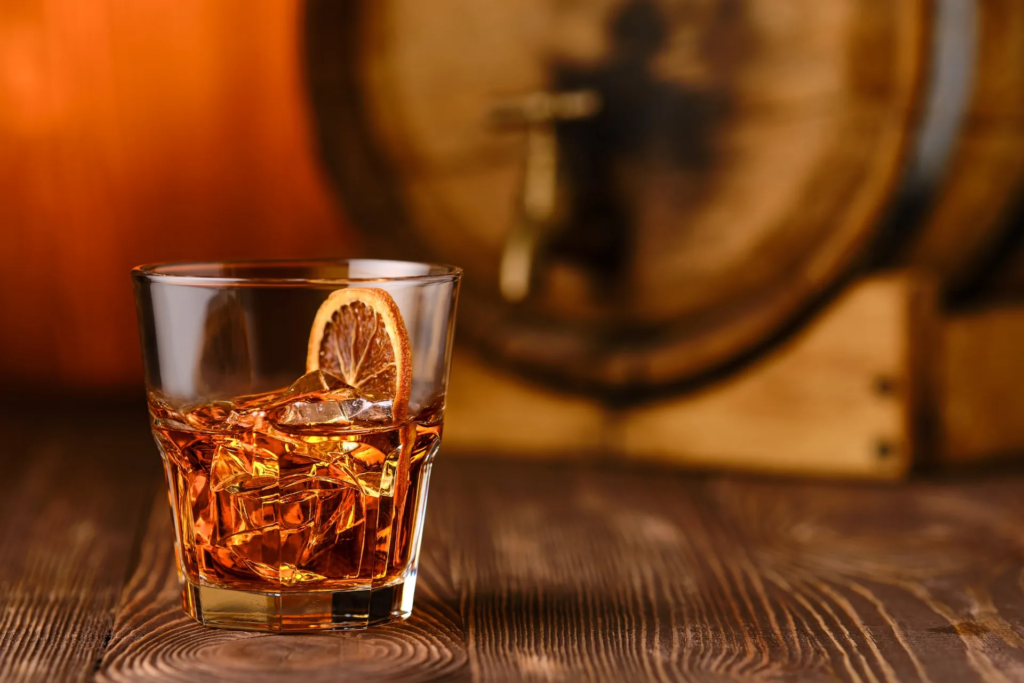
| Typical presentation | Rocks glass over ice, often with orange peel | Chilled stemmed glass without ice, often with a cherry |
| The adjustment to understand | How much sweetener and dilution you enjoy | Which whiskey and vermouth work together, and in what ratio |
| Home-bar commitment | A small set of ingredients; refrigerate homemade syrup | An opened bottle of vermouth that needs refrigeration |
| Start with it when… | You want a clearer view of the whiskey itself | You like the idea of a more layered, aromatic combination |
The Old Fashioned leaves the whiskey more exposed
An Old Fashioned changes whiskey without giving it a large second ingredient to compete with. Sugar contributes sweetness, bitters provide seasoning, and water from mixing adjusts the strength. Orange peel often adds aroma over the surface.
With bourbon, you may notice vanilla, caramel, oak, fruit, or baking spice that you already recognize from the bottle. The finished drink should still be enjoyable as a whole. More exposed whiskey is not an invitation to make the cocktail needlessly harsh.
This is a good place to start if you want to explore how a bourbon tastes in a cocktail without adding citrus juice or vermouth. It is also convenient if you like drinking over ice and noticing how a pour changes as the cube melts.
The tradeoff is that a whiskey you find unpleasant has fewer places to hide. More syrup can sweeten a woody or hot drink without making you like it. If the underlying flavor is the problem, choose another bourbon next time.
Our Old Fashioned guide goes deeper into the recipe, ice, bitters, and adjustments. You do not need a rare bottle to make the drink worthwhile.
The Manhattan gives vermouth a real part to play
A Manhattan combines whiskey with sweet red vermouth and bitters. Vermouth is aromatized, fortified wine: a wine base with added spirit and botanical flavors. It contributes much more than sweetness.
Depending on the bottle, the vermouth may bring dried-fruit, herbal, floral, bitter, or spiced impressions. Some versions feel rich and rounded; others bring a firmer herbal edge. The result is a partnership, so changing the vermouth can change the cocktail substantially even when you keep the whiskey.
Try a Manhattan if you enjoy the idea of whiskey woven into a more aromatic drink. It can suit someone who likes bittersweet flavors but does not necessarily want the citrus-led refreshment of a whiskey sour.
The tradeoff is another ingredient to understand and maintain. If you dislike the particular vermouth in a Manhattan, that does not prove you dislike Manhattans. Equally, “more complex” is not a promise that you will enjoy it more.
And the conventional cherry garnish does not make it a cherry-flavored cocktail. Pouring in cherry syrup is a separate decision.
Which one is sweeter?
There is no dependable winner by name alone.
The Old Fashioned’s sweetness depends heavily on how much sugar or syrup goes into it. In a Manhattan, the vermouth’s sweetness, bitterness, flavor, and proportion all shape the result. The whiskey and dilution influence your impression too.
A restrained Old Fashioned may taste less sweet than a rich Manhattan. A generous syrup pour can reverse that comparison. You cannot reliably settle it by looking at the glass or assuming bourbon means sweet and rye means dry.
If sweetness is your main concern at a bar, say so. Ask for an Old Fashioned made with a light hand on the sugar, or explain that you want a Manhattan with a less sweet impression and let the bartender discuss the vermouth and ratio.
Be careful with the word “dry.” A dry Manhattan can mean a specific variation using dry vermouth. If you simply want less sweetness, those are the words to use. Cocktail shorthand is useful until it orders a different drink for you.
Make either one with a few measured ingredients
These are practical starting recipes, not the only legitimate specifications. Each makes one cocktail and takes about five minutes with ingredients ready. Use ordinary aromatic bitters and ice you already have.
A bourbon Old Fashioned
- 2 oz bourbon (60 ml)
- 1 tsp 1:1 simple syrup (5 ml), made with equal weights of sugar and water
- 2 dashes aromatic bitters
- Ice for mixing and serving
- 1 strip of orange peel
- Combine the bourbon, syrup, and bitters in a mixing glass or sturdy measuring jug.
- Add plenty of ice and stir. About 20–30 seconds is an initial guide; taste and adjust because the ice and starting temperatures change the result.
- Strain over fresh ice in a rocks glass. Add a little more syrup if you want more sweetness, or allow more mixing dilution if it still feels hot and disjointed.
- Gently express the colored side of the orange peel over the drink to release its oils. Add or discard the peel as you prefer.
You can also build and stir it directly in a sturdy rocks glass. Our full Old Fashioned recipe uses the same starting amounts and explains the adjustments in more detail.
A Manhattan with bourbon or rye
- 2 oz bourbon or rye whiskey (60 ml)
- 1 oz sweet red vermouth (30 ml)
- 2 dashes aromatic bitters
- Ice for mixing
- 1 cocktail cherry, optional
- Chill your serving glass. Combine the whiskey, vermouth, and bitters in a mixing glass or sturdy measuring jug.
- Add plenty of ice and stir until chilled and suitably diluted. Start around 20–30 seconds, then taste a small sample with a clean spoon rather than trusting the clock alone.
- Strain into the chilled glass without ice. Add a cherry if you like.
- If the vermouth takes over, try reducing it to ¾ ounce in the next drink while keeping the whiskey steady. That changes both its flavor contribution and the balance, so judge the result before making further changes.
The 2:1 whiskey-to-vermouth ratio is a useful starting point. The IBA’s Manhattan uses rye and a different ratio, while bourbon producers also publish their own versions. There is room to find a combination you enjoy without declaring everyone else incorrect.
Bourbon or rye works in both
Rye is a conventional Manhattan choice and appears in the IBA specification. Bourbon is also well established in the drink. An Old Fashioned can use either too.
Bourbon can offer vanilla, caramel, fruit, and oak impressions; rye can introduce a more peppery or herbal direction. Those are starting expectations, not guarantees about an individual bottle. A spicy bourbon or a rounded rye can complicate the neat little categories.
If you want to understand the difference between the cocktails themselves, keep the whiskey the same when you compare them. Otherwise, you may be judging a change of spirit and a change of recipe at once.
There is no need to make two full drinks in one sitting. On separate occasions, note which whiskey you used and what you liked about each preparation. A small, measured comparison can also be useful if you already have both sets of ingredients.
If you are still choosing a bourbon, our beginner buying guide organizes that decision around the direction you want to explore. Buy a bottle you can actually find and comfortably use.
The vermouth bottle is the practical difference at home
If you make whiskey cocktails occasionally, this may matter more than the garnish.
Sweet red vermouth is not shelf-stable in the same way as a bottle of whiskey after opening. Seal it and refrigerate it. Exposure to oxygen gradually changes its flavor, and cold storage helps slow that process.
Follow the producer’s freshness guidance for the vermouth you buy rather than assuming every bottle has one universal deadline. Write the opening date on it so “I opened that recently” does not become a family legend.
Choose a smaller bottle if that better matches your use. A larger one can cost less per ounce while still being poor value if much of it loses the character you bought it for. You do not owe the refrigerator a full-sized bottle of every cocktail ingredient.
Vermouth can also be enjoyed on its own or over ice if you like its flavor. That is a useful option, not an obligation to develop a second drinking habit to justify the purchase.
The Old Fashioned has a simpler ingredient commitment, although homemade syrup also needs clean handling and refrigeration. If you make a cocktail only now and then and have no other use for vermouth, the Old Fashioned is the more practical home default. Order a Manhattan out when you want one.
How to order the drink you mean
A little specificity helps more than reciting a recipe across a busy bar.
For an Old Fashioned, you might say: “Bourbon Old Fashioned, please. I prefer it on the less sweet side.” If the menu describes muddled fruit, smoke, or a specialty syrup you do not want, ask about it before ordering.
For a Manhattan: “A rye Manhattan with sweet vermouth, served up, please.” Or ask for bourbon if that is what you prefer. “Up” means the drink is chilled with ice and strained into a glass without serving ice.
A Manhattan on the rocks is an option if you want ice in the finished drink. The changing dilution will be different from the usual up presentation. That is a serving preference, not an offense requiring a hearing.
If you are undecided, describe what you enjoy: direct whiskey flavor, herbal notes, restrained sweetness, or a drink over ice. A good recommendation starts with that information.
Frequently asked questions
Is a Manhattan just an Old Fashioned with vermouth?
They share whiskey and bitters, but the standard Manhattan uses sweet vermouth where an Old Fashioned uses a small separate sugar or syrup addition. Vermouth contributes wine-based flavor and botanicals as well as sweetness. Adding it on top of a complete Old Fashioned recipe will not necessarily produce a balanced Manhattan.
Which drink is stronger?
It depends on the whiskey proof, quantities, and dilution. Vermouth contains alcohol too, so a Manhattan is not automatically lower in total alcohol because one ingredient is wine-based. A smoother or less hot impression is not a reliable measure of how much alcohol is in the glass.
Which should a beginner try first?
Try the Old Fashioned if you want whiskey with relatively simple additions. Try the Manhattan if wine-based, herbal, and bittersweet flavors sound appealing. Neither is a required first step. If you would rather have citrus and refreshment, our whiskey sour guide may be a better starting point.
Can I make a Manhattan without vermouth?
You can make other whiskey cocktails, including variations that replace it, but vermouth is central to the standard Manhattan described here. If you want to use whiskey, bitters, and a little syrup instead, an Old Fashioned already does that job.
Do I need different glasses for each?
No. A rocks glass is convenient for an Old Fashioned over ice, and a stemmed glass suits a Manhattan served up. Begin with suitable glasses you own rather than treating the presentation as a shopping list. Our glassware guide explains when a change is useful.
Should I shake either cocktail?
Stir the starting recipes here. Their ingredients combine readily, and stirring chills and dilutes without the same aeration shaking would introduce. A deliberately shaken variation may be someone’s preference, but it changes the texture and appearance.
Choose the one you want to repeat
If you want whiskey with a little seasoning and sweetness, start with the Old Fashioned. If you want to explore what vermouth brings to whiskey, choose the Manhattan.
Then pay attention to the recipe as well as the name. One heavy-handed pour of syrup does not represent every Old Fashioned. One disappointing vermouth does not speak for every Manhattan.
You can prefer either, enjoy both, or change your mind with dinner. The useful result is knowing what to ask for the next time the menu offers you the choice.